Audience Studies (3P18) Blog Post #3 – Liana Islami
The concept of fandom has become somewhat of a recent phenomenon in the twenty-first century. Short for “fanatic,” fans have historically been referred to those who have an unwavering belief in a religious being (Sullivan, 2013, p. 192). This concept began to kickstart negative stereotypes associated with the phrase in recent years, usually referring to individuals identifying as being part of fandoms as deranged. It is important to understand why fans are associated with negative connotations, however. According to Sullivan (2013), critics of high regard viewed popular culture as worthless and not important enough to inhibit any real study by scholars. Anyone who consumed popular culture materials were deemed as mindless as the materials themselves (Sullivan, 2013, p. 193). Therefore, fandoms have been left at the short end of the stick with critics who embodied “taste” writing them off as mindless material meant for the masses. That any popular culture text did not have anything to offer that was worthwhile, thought-provoking, and deep. These critics did not stop fans from loudly praising and consuming their favourite popular texts, however. Fans interact with each other online and in social settings. Fans promote their beloved media texts with enthusiasm and excitement and without shame. Most importantly, fans embody their chosen popular culture text. This blog post will analyze the ways in which fandoms interact with one another online, specifically the Taylor Swift fandom on blogging website Tumblr. Additionally, this post will also examine the ways in which Swift herself provides additional material along with her albums to create a more interactive fanbase for her fans online.
Tumblr is a microblogging and social media website in which users are able to blog about their interests in a variety of ways. Users can create text posts and upload photos and other media. In turn, blogs “follow” each other and “reblog” others’ original content onto their own blogs. Text, photos, and other media circulate into other blogs’ orbits and have the ability to be re-shared multiple times. Tumblr differs from other traditional websites in the sense that the atmosphere acts less formal in terms of what users post. Rarely does one find a Tumblr blogger who uploads paragraphs worth of thoughtful information; Tumblr is a website designed for users to express their interests in a creative way and interact with other users who share these same interests.
In particular, the Taylor Swift fandom has an overwhelming presence on Tumblr. One reason for this is that Swift herself is extremely active on the website – she frequently interacts with her fans online. When she first joined Tumblr, Swift had a couple of questions on how to work the social networking site: 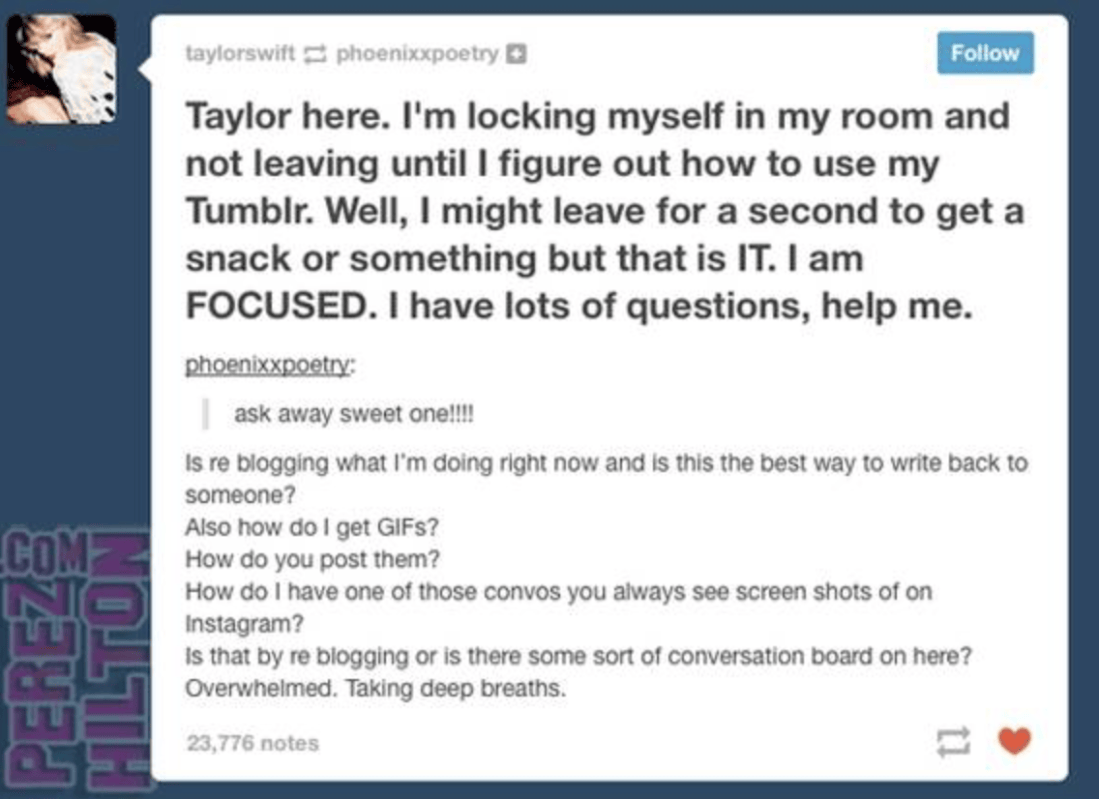 (from PerezHilton.com)
Her fans responded immediately, showing the international pop superstar the ropes in working the website. Since then, Swift has become a pro at working Tumblr, offering her fans emotional support and advice when they are going through hard times. 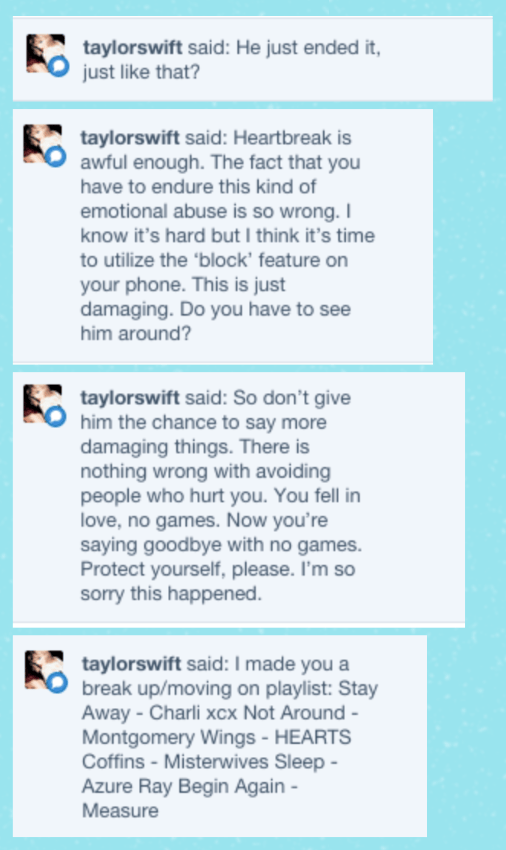
(from Pinterest.com)
As shown, Swift really does have an incredible relationship with her fans online; something that is quite unique among musicians nowadays. Her ability to influence fandom engagement in the Tumblr-sphere further perpetuates the idea that fans will proudly announce their love for a particular media text online, regardless of what others might say or think.
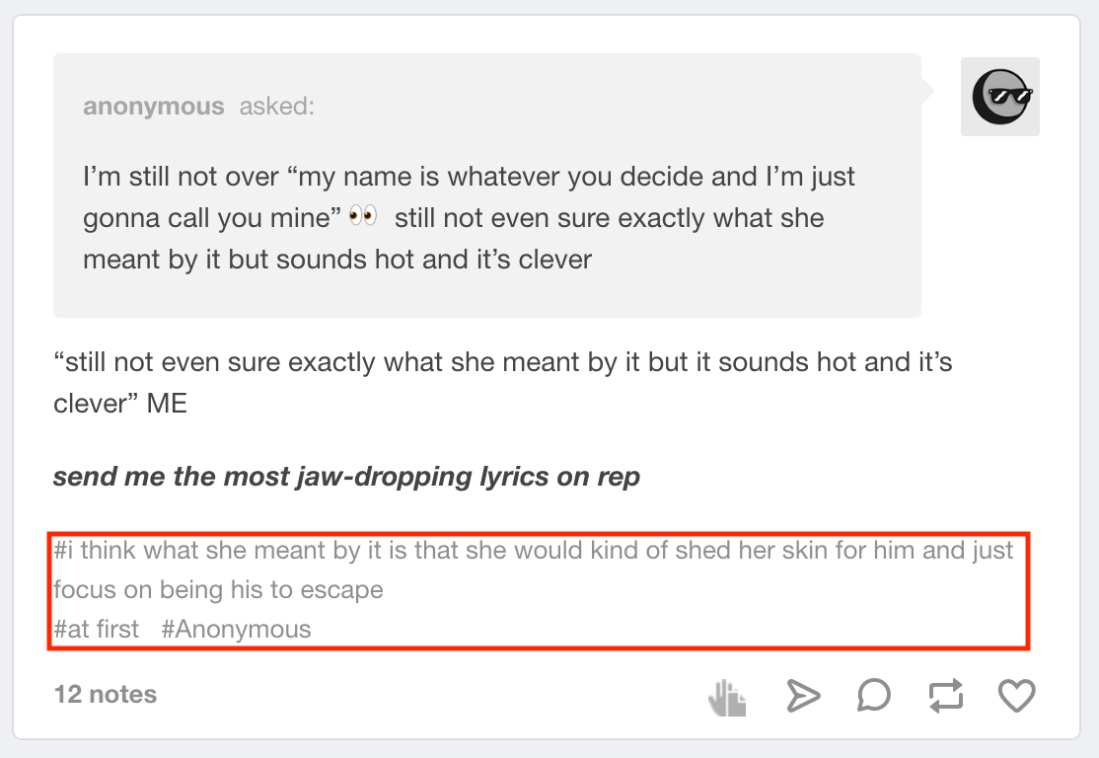
To continue, Sullivan (2013) outlines two distinct elements that make up media fandom: the social aspect, which refers to the ways in which media fandoms “band together in either informal or more formally structured groups to share their mutual interest with others” (p. 195). The second element, the interpretive aspect, consists of fans who take on the role of interpreters and producers of media content (Sullivan, 2013, p. 195). The focus will remain primarily on the social aspect of media fandom in relation to the Taylor Swift fandom on Tumblr. In this context, Sullivan (2013) notes that fans do not simply want to consume their chosen text. They want to share their passion and excitement about the content with other people, relate the text to their personal lives, and fully unpack the finer points of the text with others (p. 195). This phenomenon is particularly evident in the Swift fandom on Tumblr. With the recent release of Swift’s sixth studio album, reputation (2017), fans have been interacting about the artistic quality of the music with others on Tumblr. For example, one fan frequently answers questions in her inbox on Tumblr regarding the meanings of Swift’s lyrics on the album –
(from cages-boxes-hunters-foxes.tumblr.com)
As seen from the above screenshot, fans on Tumblr are actively interacting with one another to discuss a deeper level meaning in Swift’s reputation lyrics (highlighted in the red box). Fans send each other questions and comment on one another’s posts, unpacking the different messages evident in Swift’s lyrics. In this way, fans engage with their favourite media text far beyond the point where they simply listen to it. The media text becomes a focal point for fans to interpret deeper connotations in it.
Similarly, Navar-Gill (2018) classifies fandom participation into two elements: affirmational and transformational fandom (p. 212). Affirmational fans “celebrate the text as is and accept industry guidelines for textual interpretation and participation” (Navar-Gill, 2018, p. 212). In other words, these fans consume a media text without incorporating further thought and analysis into the work – they simply consume the text at the most basic level. On the other hand, transformational fans “tend to twist and reimagine the text in non-sanctioned ways through creative work, asserting a kind of moral ownership over the text” (Navar-Gill, 2018, p. 212). Fans who are particularly passionate about a certain media text will find ways to interpret it more deeply than casual consumers. They will create their own user-generated content (Sullivan, 2013) surrounding the media text to present their love for the messages it produces. The Swift fandom on Tumblr establish a transformational stance on Swift’s media products. Of course this is evident in the conversations they have with one another, but fans will also take the media text and produce their own creative content with it such as photo edits, gifsets, and other media.
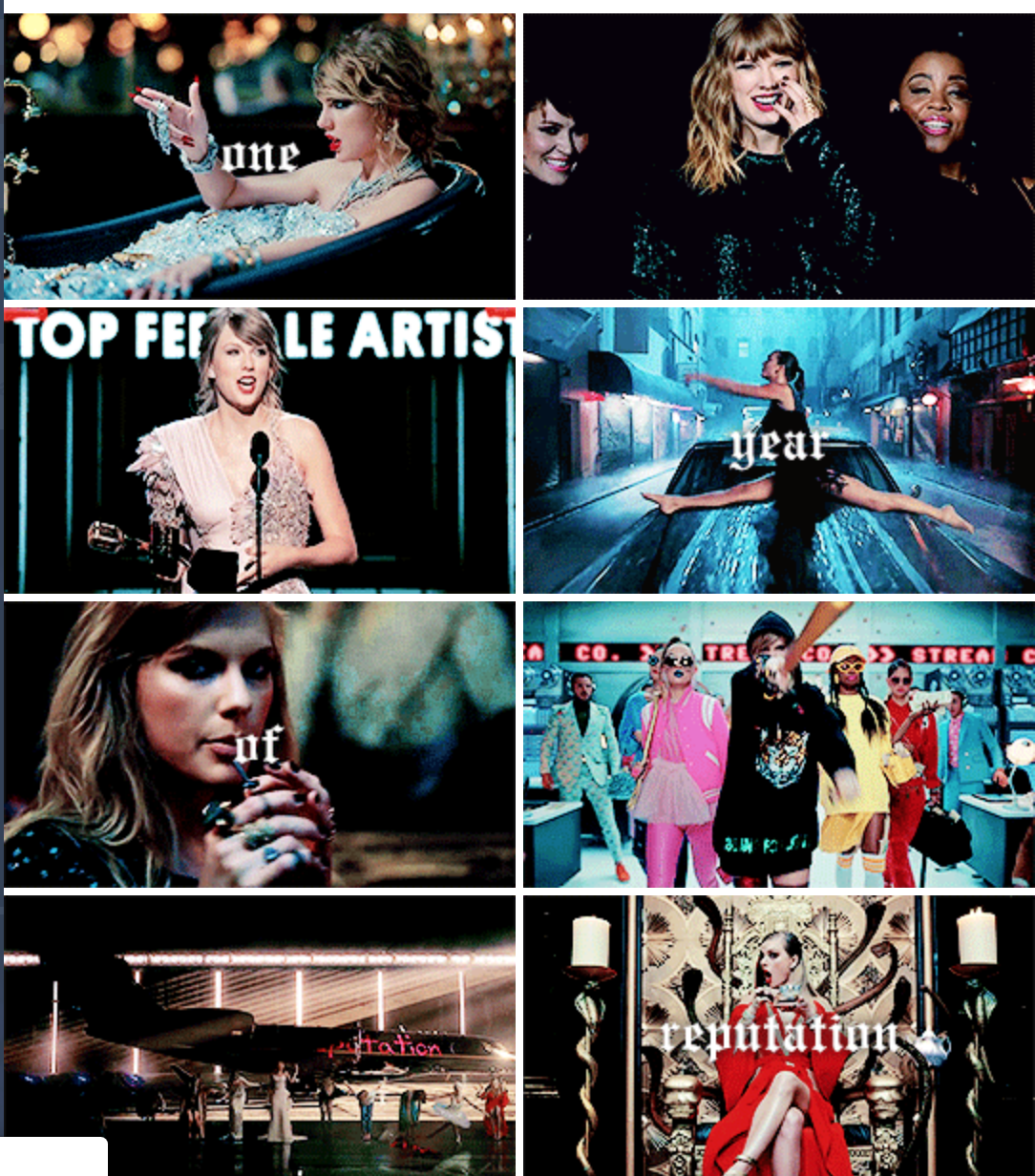
For instance, following the one-year anniversary of Swift’s album release of reputation, fans on Tumblr began creating edits celebrating the album in all its glory. The following images is an example of a gifset that a fan created and published onto their blog:
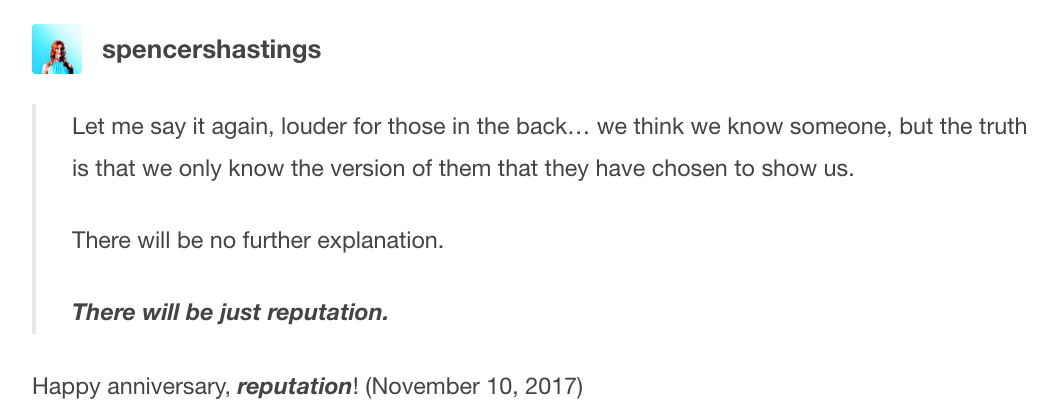
(from spencershastings.tumblr.com)
Taylor Swift fans on Tumblr interact with each other by “reblogging” and supporting each other’s edit-making. In this way, Tumblr fans continue to decode deeper meanings into their favourite media texts. Fans apply their creative abilities to celebrate an artist’s work that holds a special place within them.
In addition to transformational fans becoming creative agents online, Navar-Gill (2018) also notes how these fans tend to be imagined as “female, queer, and/or people of color who feel undeserved by the media” (p. 212). This distinction appears to be generally true in the Swift fandom on Tumblr. Many fans have expressed their views on the ways in which LGBTQ+ and POC fans have been treated by the general public. They believe that the general public generalizes Taylor Swift fans as cis and white, which becomes harmful for POC and LGBTQ+ fans who do not fit that demographic. To counter this view and allow fans to feel more comfortable in the online fandom, two Tumblr bloggers (users @nliallofficial & @ofrunningfoxes) created “@swiftiesofcolor,” a blog that celebrates the existence POC and LGBTQ+ Taylor Swift fans on Tumblr. In addition to the creation of the blog, @swiftiesofcolor also invented “POC selfie nights” and “LGBTQ+ selfie nights” in which fans upload pictures of themselves online for others to like and reblog. In this way, fans boost each other with warm messages and promote the message that fans of all races and sexualities are welcome and appreciated and exist in the Taylor Swift fandom. One fan expressed her views on the POC/LGBTQ+ selfie nights:
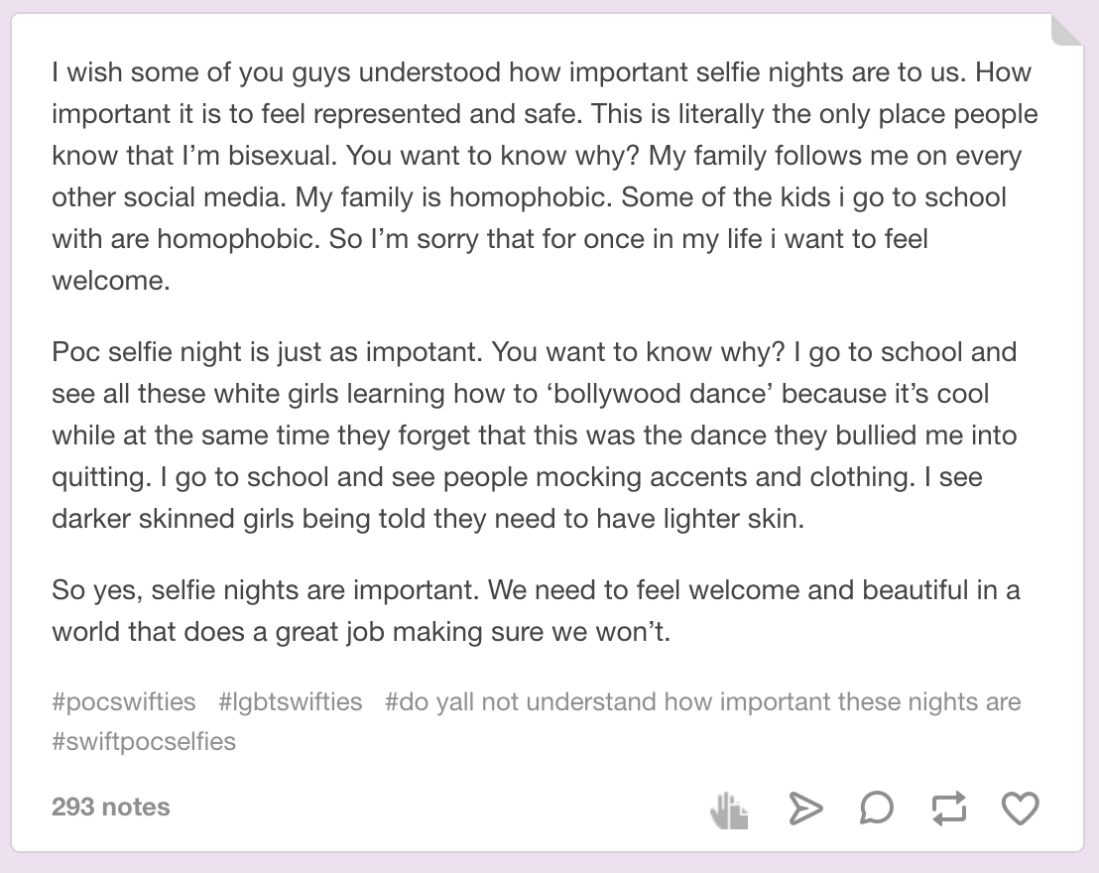
Therefore, Navar-Gill’s (2018) definition of transformational fans fits into the Taylor Swift Tumblr fandom in a way that represents the individuals who feel unappreciated and underrepresented in their real lives. Tumblr as a social networking site becomes a safe space for disadvantaged groups to celebrate common interests with other people.
Moving forward, Swift fans on Tumblr engage with the different types of content they receive from Swift herself. Sullivan (2013) discusses the concept of transmedia production which “refers to the coordinated use of multiple media platforms (or technologies) to craft a narrative … open up the possibility for audience participation and dialogue with media producers” (p. 241). With the release of reputation, Swift released short video clips that show audiences the process of songwriting she goes through to create her music. In this way, Swift actively engages with her fans, giving them insight as to how she creates the music they admire. Fans in turn find the videos particularly fascinating because they resonate with Swift’s music on a deeper level than casual fans.
In addition to Swift practicing transmedia production, she also involves herself in creating multiple paratexts for her fans. Sullivan (2013) defines the term as “textual material that surrounds media narratives and informs us about them” (p. 241). Swift not only released a physical copy of the reputation CD, but she also released exclusive magazines that come with it. Two variations of the magazine included handwritten lyrics to each of the songs on the album, personal polaroids, a poem written by Swift, and a large poster of a painting Swift created herself. 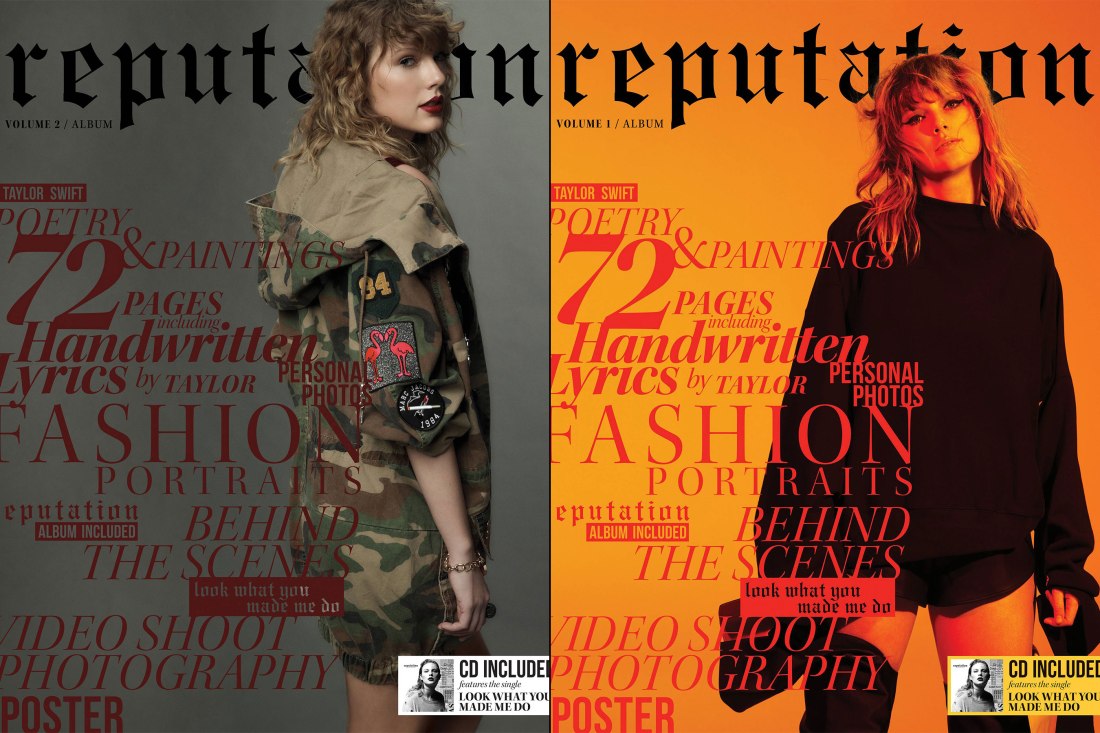
Swift therefore allows her fans to gain additional information on the album by providing these magazines for sale with the CD. Audiences become active in consuming the texts and interpreting different meanings in the music. This allows Swift to gain a more solid fanbase and connection with her most passionate fans.
In conclusion, the Taylor Swift fandom on Tumblr is more active and engaging than ever before – mostly due to the fact that Swift herself talks with her fans online. By providing fans with thought-provoking content to analyze, fans who connect with Swift’s lyrics consistently discuss their deeper meanings with one another on Tumblr. Additionally, Swift fans create their own content for others to enjoy and reblog (edits and gifs). These fans are mostly transformational in a sense that they feel disadvantaged from the rest of society – which reflects back to the way Swift fans are specifically treated by the general public. To combat this issue, fans on Tumblr support each other no matter what – with special appreciation to the people of colour and LGBTQ+ fans. In addition, Swift fuels discussions of deeper connotations of her lyrics and her albums by providing fans additional content to consume surrounding the media text. In this way, Tumblr fans are active, engaging, and present.
In the last chapter of Media Audiences, Sullivan (2013) poses the question “does the concept of ‘audience’ still have relevance in today’s media environment?” (p. 245). He argues that it does, especially in our current digitized world, and that media scholars should pay special attention to the shifting boundaries between producers and audiences. As we begin to see, the line between the two is becoming blurred. Audiences have much more control over media content then they ever had before. With such an involved audience, it is important to remember that audiences have much more say in what succeeds and what does not in today’s society.


 Liana's Audience Analysis Blog